
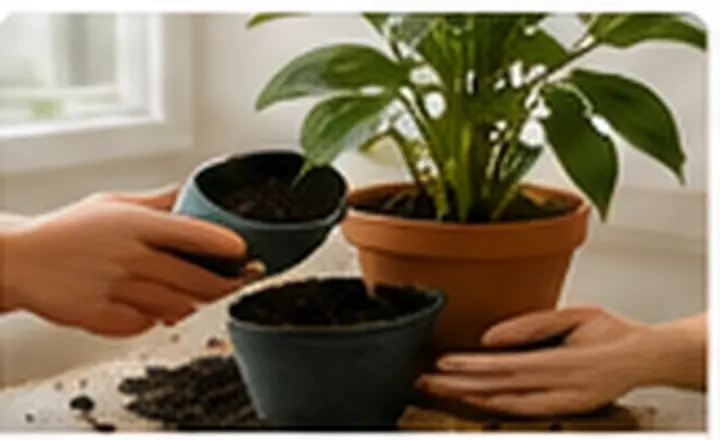
Indoor plant care is a process of observation. Before changing products or routines, compare the plant’s current condition with its recent light, watering, root environment, temperature and pest history. This prevents one symptom from triggering several conflicting treatments.
What makes a beginner plant
A good first plant tolerates small mistakes, shows clear signals and recovers when conditions improve. It should also fit the home’s light and any pet or child safety needs.
- Snake plant for drier care.
- Spider plant for brighter rooms and visible growth.
- Pothos or heartleaf philodendron for trailing form, with pet precautions.
Start small
One to three plants are easier to observe than a large collection. Learn how each pot feels before and after watering and how quickly the soil dries in your room.
- Label the plant with its botanical name.
- Keep nursery care information.
- Take monthly photos.
Avoid beginner traps
Do not repot immediately without a reason, water every day, or buy plants only because a label says “low light.” Avoid decorative containers with no drainage unless used as cachepots.
- Inspect for pests before buying.
- Choose healthy roots and growth.
- Budget for suitable light before accessories.
A simple action plan
- Identify the plant by botanical name where possible.
- Record the symptom, soil condition, light and recent changes.
- Correct the most likely environmental cause first.
- Recheck new growth before making another major change.
Local water, climate, building design and product labels differ internationally. Follow local horticultural and safety guidance when using fertilizers, pesticides, electrical grow lights or humidifiers.